Monday, July 30, 2012

Top 10 Films of 2011

It took me a little while to get through all the major films of the year so I could feel confident in putting out a strong top 10 list for 2011 (I will say I still have not seen the two films Todd and Zach claim to be the best of the year).  As we look back on the mark left by 2011 in the coming years in film, the best way to describe it would be the year of nostalgia.  So many films this year pay homage to the films and times of the past.  Some of those films will be found on my list.  As of today, I have watched 52 films from last year.  This list includes the ten films I have given 4 stars to from 2011.  First, here are some films that just missed the list.  Enjoy!

Honorable Mention: Drive, Moneyball, Harry Potter and the Deathly Hallows: Part 2
Drive Poster
Moneyball Poster
Harry Potter and the Deathly Hallows: Part II poster


10. Crazy, Stupid, Love. (directed by Glenn Ficarra & John Requa)
Crazy, Stupid, Love. poster
It seems like every year there is one romantic comedy that breaks the stereotypes of the traditional rom-com and become something greater.  In 2009, it was It's Complicated.  Sometimes, like in 1998 with Shakespeare in Love, the film can even find its way to the Oscar.  This year's standout romantic comedy was Crazy, Stupid, Love.  This film gave one of the best casts of the year with Steve Carell, Julianne Moore, Marisa Tomei, Emma Stone, Kevin Bacon, and Ryan Gosling (who had one of the best years in recent memory).  Although Gosling steals the show whenever he is on screen, the cast as a whole works so well together to make a perfect picture of realistic characters and relationships.  It doesn't force its laughs or its tender spots.  They are organic and authentic.  It is a wonderful all around film.


9.  Win Win (directed by Thomas McCarthy)
Win Win poster
I was very excited to see this film as it was Thomas McCarthy's follow-up after 2008's The Visitor which was one of my top movies of that year and a real surprise.  This film turned out to be just as great as his last one.  Like The Visitor, this film centers around the troubled life of the main character while he goes about his daily business.  This time around, it is Paul Giamatti in the leading role as a lawyer and high school wrestling coach who stumbles across an amazing wrestler that changes the look of his team, but caused him to be dishonest to get him.  McCarthy does a wonderful job of making his films feel completely authentic and real. You can identify with all his characters.  You may not like them, but you relate to them and feel for them.  Even though this was an anticipated film for me, it still was my surprise of the year.


8.  Hugo (directed by Martin Scorsese)
Hugo Poster
Nostalgia film #1.  Scorsese takes a different turn and makes a children's adventure film here, but there is a reason he chose this one to make.  For someone who loves and appreciates the filmmakers who came before him, no one could have done this story justice quite like he could.  It tells the story of a young orphan who finds his way into discovering a robot that introduces him and the audience to the silent films of one of the greatest turn of the century filmmakers, Georges Melies.  It was a beautiful film start to finish that not only allowed the younger generation to experience Scorsese's brilliance, but also instilled a love and respect for those that come before.


7.  The Help (directed by Tate Taylor)
The Help poster
There is always a feel-good critical darling that becomes a top Oscar film of the year.  Sometimes I really don't understand the love for it (2009's The Blind Side), and sometimes I am right with everyone on the love.  The Help is one of these films.  I was not really looking forward to this film, but felt obligated to see it as it was a Best Picture nominee.  It blew me away.  It is such a strong story brought to life by an outstanding cast.  For a feel-good movie like this to succeed, it has to bring about a genuine emotional attachment to a character.  This film moves the viewer to have an emotional attachment for four or five characters.  I am a sucker for a film where you root for the underdog, and this is definitely one of them.


6.  The Girl With the Dragon Tattoo (directed by David Fincher)
The Girl with the Dragon Tattoo Poster
I will start out by saying I have not seen the original film.  However, it shouldn't matter on the quality of the American remake ... Todd.  Anyways, there has never been a David Fincher film I didn't like, and this is no exception.  Rooney Mara's Lisbeth Salander is haunting throughout.  All the characters work and fit perfectly into their roles.  You add to that David Fincher making his return to psychological thrillers, and you have a perfect storm making a near perfect film.


5.  Source Code (directed by Duncan Jones)
Source Code poster
This was my top movie of the first half of the year.  This story just fascinated me from start to finish.  Duncan Jones, as he did with his last film Moon, does such a great job at establishing a sci-fi alternate reality that his films take place in.  In this film, Jake Gyllenhaal relives the same 8 minutes trying to find a potential bomb threat.  From the first minute, you buy into the concept and are with the characters on every twist and turn.  Such a fun film.


4.  Super 8 (directed by JJ Abrams)
Super 8 poster
Nostalgia film #2.  This film is a throwback to the Steven Spielberg sci-fi films of the 80's.  It was also one of the most secretive projects of the last few years.  It was well worth the wait.  JJ Abrams not only appropriately (unlike a film like War Horse) pays homage to the films that paved the way for this one, but he tells a thrilling sci-fi story in such a sweet and innocent way that you instantly fall in love with it.  This will be a classic for years to come in the same way its predecessors like E.T. and Close Encounter of the Third Kind are now.


3.  We Bought a Zoo (directed by Cameron Crowe)
We Bought a Zoo Poster
There was something with me loving the feel-good movies this year.  Either that, or there were just some amazing feel-good movies made.  This one was one of my most anticipated films of the year, and most overdue as it marked Cameron Crowe's first film since 2005.  Based on a true story, Matt Damon plays a journalist that decides to move his kids out of the city after his wife dies and buys a zoo as a project for them to come together.  It is such a beautiful story with wonderful cast.  Seriously, why doesn't this guy make more movies?


2.  Midnight in Paris (directed by Woody Allen)
Midnight in Paris poster
Nostalgia film #3.  It is rare that I absolutely love everything about a Woody Allen movie.  It is also rare that I love everything about an Owen Wilson movie.  I guess they just had to come together for it to happen.  Owen Wilson breaks out of his usual stigma and gives his best performance as an author who falls in love with the city of Paris during his midnight walks.  Everything about this film works.  Every character and caricature work perfectly.  The music matches the mood and feel.  Woody Allen's quirkiness and Owen Wilson's quirkiness are a match that works amazingly.  I loved everything about this film.  In some years, it may have been my number one.


1.  The Artist (directed by Michel Hazanavicius)
The Artist Poster
Nostalgia film #4.  There are few films that come around that change the way you look at films.  This was one of those films for me.  This bit of nostalgia goes back a little further than the other films on the list.  Jean Dujardin stars as silent film star George Valentin during the transition from silent films to talkies.  He holds firm to his art form and pays the price for it by falling into obscurity.  This film introduces a new generation to a whole genre of film that had been all but forgotten by producing one of the best of its kind in the first major silent film in some 70 years.  This is my favorite film of the year, and with time could be my favorite of this young 21st century and one of my favorites of all time.

Sunday, July 29, 2012

Power Rankings: Fake movies we wish were real


This list could be filled with almost any movie mentioned in Seinfeld or 30 Rock, but my scope of knowledge of those shows is not the greatest (hence why only two are mentioned). Other easy qualifiers are the Grindhouse films and Tropic Thunder films, even though most of the former are planned for actual production (omitted those ones). I tried to diversify this list a bit, but it basically ended up just being a bunch of comedies. Nothing wrong with that, though. I will also give my best shot at assigning the film a writing and directing team. Check it out…


Others receiving votes: Ants in Your Pants of 1939 (Sullivan’s Travels), Austinpussy (Austin Powers in Goldmember), Fiercely (What Just Happened), Maximum: Extreme 2 (Charlie’s Angels: Full Throttle), Meet Pamela (Day For Night), Nation’s Pride (Inglourious Basterds), Re-Do (Funny People), Rochelle, Rochelle (Seinfeld), Satan’s Alley (Tropic Thunder), Simple Jack (Tropic Thunder)


10. ASSES OF FIRE (South Park: Bigger, Longer & Uncut)
What we know about the plot: Stupid comedy about two moronic, profane Canadian friends who fart, sing, and insult their way to huge laughs
Writers/Directors: Bobby Farrelly, Peter Farrelly
Why? I am not sure how much more popular this would be than the typical Adam Sandler movie or something, but when the Farrelly brothers are making gross-out R-rated comedies, few filmmakers are more effective. The weird thing is that it is technically live action, so that would definitely make it a bit different.

9. GOOD WILL HUNTING 2: HUNTING SEASON (Jay and Silent Bob Strike Back)
What we know about the plot: A comedy regurgitation of the masterpiece. How do you like them apples? Applesauce, bitch!
Writer: Matt Damon (story), Ben Affleck (story), Seth MacFarlane (screenplay)
Director: Seth MacFarlane
Why? This would probably be awful, unless it really embraces its ridiculousness. In the movie, it is made to be an actual sequel with the stars just looking for a payday, but if someone like MacFarlane got his hands on it, it could be hilarious. Granted, the story is not exactly as iconic as Star Wars, but if I could somehow see Will and Chuckie in a movie again, I would be there in a minute.

8. CHICKS WHO LOVE GUNS (Jackie Brown)
What we know about the plot: More of an informational video than a real movie, but it is all about chicks in bikinis shooting and discussing their assault rifles
Writer: Quentin Tarantino (story), Edgar Wright (story), Robert Rodriguez (story), Eli Roth (story/screenplay)
Director: Eli Roth
Why? Honestly, I am not even sure what this actually is, but if we get the Tarantino brain trust thinking up a story, then this would be amazing. Eli Roth seems to be the one of the four that is least concerned with what people think of his work. He would take the jump and make this into something insane.

7. SACK LUNCH(Seinfeld)
What we know about the plot: A light escapist comedy with a poster featuring a family in a brown paper bag. Details about how they got there and whether the family got shrunk or it is just a giant bag is not disclosed.
Writer: Paul Rudd (story/screenplay), David Wain (story)
Director: David Wain
Why? What makes the thing so great is that Elaine never really thinks about how the bag may be figurative. I assume that it is a real bag, but still. It seems like a light, funny Paul Rudd-esque story. I assume that he and Wain would make it more than just Honey, I Shrunk the Kids or something of that nature.

6. HOME FOR PURIM (For Your Consideration)
What we know about the plot: A Jewish family in 1940s, complete with a patriarch, dying matriarch, lesbian daughter and girlfriend, and son returning from war, gathering to celebrate the Jewish holiday, Purim
Writer: Lawrence Kasdan
Director: Mike Nichols
Why? All the while watching FYC, I always thought this looked like a very watchable movie. It seems like a Kasdan story (there is no way that he wouldn’t direct), but Nichols would make this into a brilliant talky movie in a way that only he can. If they are involved, then maybe it won’t just be one anonymous blogger talking about its Oscar buzz…

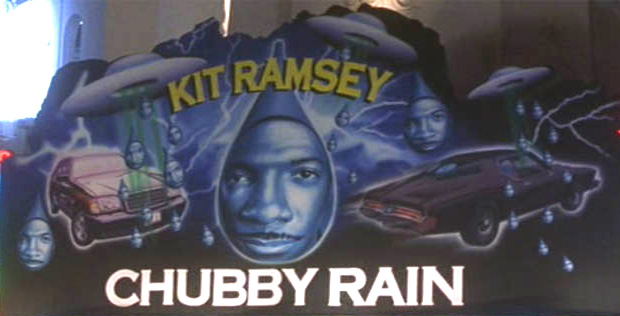
5. CHUBBY RAIN (Bowfinger)
What we know about the plot: A campy sci-fi alien action movie culminating with the awesome kill scene and line “Gotcha suckers!”
Writer/Director: John Carpenter
Why? Carpenter seemed to be the go-to guy for schlocky horror movies, and this one looks no different. I don’t know how Carpenter can make the cliché and ridiculous be interesting and groundbreaking, but he does. This screenplay would need a rewrite, and it could well be Carpenter’s ticket back to the Hollywood eye.

4. ANGELS WITH FILTHY SOULS (Home Alone)
What we know about the plot: At some point mobster Johnny guns down fellow mobster Snakes, using his token line “keep the change, you filthy animal”
Writer/Director: Matthew Weiner
Why? It has been forever since we have had a real hardcore gangster movie. Who better than Weiner to make a send-up to the Cagney-era gangster flicks? This would be among the coolest things ever. Oh, and don’t forget about the sequel “Filthier Souls” from Home Alone 2!

3. THE 3 (Adaptation)
What we know about the plot: It is a dark, cliché psychological thriller about a serial killer
Writer: Donald Kaufman (screenplay/story), Charlie Kaufman (story)
Director: Donald Kaufman
Why? As Terry pointed out to me, Donald dies, so he can’t direct it. However, that was a movie, not real life. But Donald is not real to begin with, and his Oscar nom was not labeled as posthumous. Screw it, he is directing the movie because we all know that Charlie was not all that into it. The movie was kind of already made as Identity, but “The 3” promises to be so much more awesome.

2. WEREWOLF WOMEN OF THE SS (Grindhouse)
What we know about the plot: Hitler’s diabolical plans to create a race of superwomen, with Nicolas Cage as Fu Manchu!
Writer/Director: Rob Zombie
Why? This is the only one of those mock trailers that has no plans or shot of ever being made, yet it was the coolest one…well other than Machete. I laughed so hard during the trailer, and yet Zombie has the kind of horror skill and comedic timing that this could turn into a modern horror masterpiece. I need this movie!

1. COMING HOME IN A BODYBAG (True Romance)
What we know about the plot: a Vietnam movie and apparently the only movie to win the Oscar with balls since The Deer Hunter
Writer/Director: Quentin Tarantino
Why? So many directors have taken on a Vietnam movie, yet Tarantino seems to be the one custom built to make one. They talk this movie up as being the shit, and when you have a Tarantino script mentioning how awesome Deer Hunter is, you know it has my attention. The title is perfect. If Tarantino puts his mind to it, then I think we could be looking at an all-time war classic. After first watching True Romance, I wanted so badly for the movie to be real. And yet with the million movies that QT promises to make, this has never been mentioned. Sigh…

That was so much fun to write. Thoughts? Omissions? Your list?

Tuesday, July 17, 2012

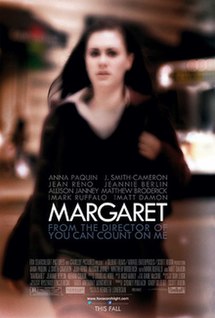
The Best Film of 2011: Margaret

Directed by
Kenneth Lonergan
Margaret is a movie that has been one of my 5 most anticipated films each year for the past 7 years. That’s right, 7 years. The film was shot back in 2005, and after going through post-production hell, the movie was deemed “unreleaseable” at one point. There were lawsuits filed over the extension of the editing process, and the original cut of the film (just over 3 hours) was butchered down to an initial 90 minutes, which garnered the film some scathing reviews and made the movie that much harder to get released (Once Upon a Time in America, anyone?). Finally, seven years after the film wrapped, the film was released in a compromised 150 minute form, yet basically no one saw it in theaters. The video release is going to be where the film gets its reputation, featuring the theatrical and extended cuts of the film. Some reviewers who gave the initial version a negative review have viewed the director’s cut and changed it to positive, sometimes in as drastic of a 180 as Ebert’s Brown Bunny fiasco.
Having said all of that, this film is clearly the best film I have seen released in 2011. Kenneth Lonergan (whose only other directorial effort was the brilliant 2000 feature You Can Count on Me) creates a masterwork that ranks with the finest films of the past few years. It is probably the most ambitious film of 2011 (even more that The Tree of Life). It is the most emotionally impactful film of 2011. Even when would you would have expected it to take a scene off from the grief or had an opportunity for an easy way out, Lonergan keeps the scope on his characters and makes the audience feel it. Not every scene works, but the vast majority does. And the ones that do work are richly-drawn and unforgettable.

The film revolves around outspoken Manhattan high school student Lisa Cohen (Oscar-winner Anna Paquin, three years before she first donned a Merlotte's uniform) who witnesses a horrific traffic accident which killed a woman (Allison Janney), an accident that she feels increasingly responsible for. Lisa knows that the driver of the bus (Mark Ruffalo) did not intentionally run her over, but their combined role could be construed as reckless. They both brush it off with no crime filed, yet both feel the deep-seeded guilt over the death of the innocent woman. The film is not a Guillermo Arriaga-type story in which it examines the effect an incident has on everyone involved. The film is about Lisa. It is about her trying to set things right with her screwed view of the world. She pushes away her caring family and concerned teachers. She seeks out a lawsuit against the driver with the best friend of the victim (Jeannie Berlin). She strains every relationship in her life, but the person who is most broken is Lisa herself.
The movie could easily have delved into melodramatic territory and be a burden on the audience, but every scene is so beautifully shot and brilliantly written that the audience is left spellbound for the duration. What is most amazing is that Lisa is not at all a likable character. She is a horrible person who can only justify her actions to herself. She is scathing for no reason to her actress mother (J. Smith-Cameron, Oscar-worthy) and she manipulates everyone around her. When someone tries to make a connection with her and help her get through the grief, like her teacher Mr. Aaron (Oscar-winner Matt Damon), she does nothing but tries to use him for her own reasons. Paquin really digs deep into her character and into our hearts. She gives far and away her best performance ever, and had the film gotten a wide release and more people had seen the film in its rightful form, the full 186 minute cut, there is no doubt in my mind that she could have walked away with the Oscar gold.

The supporting players are uniformly great as well. It is interesting to look at it now, though, considering this astonishing ensemble were near-nobodies at the time of filming. Rosemarie DeWitt has one scene. Michael Ealy has a small part. Olivia Thirlby has a few lines. Sarah Steele (in her second movie) has very limited time. Krysten Ritter has a bit part. It is the more established actors that make the movie click, though. Matthew Broderick, in a somewhat meaningless role, performs admirably. Matt Damon is restrained and sensitive. Mark Ruffalo is fantastic. Kieran Culkin did his thing. Jean Reno is always fun to see. Allison Janney’s scene is devastating. The best-in-show reviews, however went to one of the great “Where the hell have they been?” performances this side of Jackie Earle Haley in Little Children. That actress was Jeannie Berlin, just her third film since her Oscar nom back in 1972. She is emotional and professional, probably the most relatable character in the film, and that is because she is so grounded. Her character is the heart of the second half, but it is still Paquin that still dominates the film.
The screenplay by Lonergan is insightful and is one of the greatest assets of the film. His words are so precise and his characters are all fleshed out to near perfection. He packs so many words into each scene, making each scene seem so vital to the story, and at times, maybe even a bit rushed. Honestly, the film could have even been longer. The audience wants to live in this world for as long as possible. The 150 minute version is a blistering masterpiece, but it almost needs those extra 36 minutes to really complete the story. There is enough that happens in the film to even justify a miniseries. In fact, by the time the credits roll after the beautiful final shot of the film, you will feel as much connection to these characters as you would characters you have watched for an entire season of television. The comparison to Once Upon a Time in America is legitimate. I could have watched Noodles and Max forever. I feel the almost the same about Lisa. Her character is so intriguing and haunting that I cannot help but be captivated by her presence in every shot of the film.

What makes this Margaret so great is how differently it handles the material. It is so immersed in its own atmosphere and characters that it will take time off from the story to make a point about something unrelated just to establish more character development within Lisa, while never losing the film’s razor-sharp edge. She wears her emotions on her sleeve perhaps more than any movie character ever. She overdramatizes everything, but as she says, she is a teenager and her mother is an actress, so it’s not her fault if she overdoes it. Watching Lisa go on her journey through self-justification and emotional hell is both fascinating to watch and intellectually-stimulating. She is a typical high-brow teenage New Yorker. She has a take on everything, despite her lack of education on the subject. She uses and misuses a ridiculous vocabulary. She is snobby and manipulative. The world revolves around her. How could the movie be so appealing then? Just go watch it and see for yourself. It may not be for everyone, but if you get into it, I can promise that you will never be on a more satisfying emotional roller-coaster watching a film. It is worth every penny and every second.

Rating: 4 stars

#1  of 2011

Friday, July 13, 2012

NFL Win Totals: Five Early Predictions


Sportsbook has released their over/unders for NFL teams for the 2012 season.  If you live in Vegas, this is a great opportunity to invest a hearty sum of cash right now and see a nice return by the new year.  If you do not live in Vegas, it is a good reason to convince your wife to move there.  OK, maybe not.  Actually, it’s a good way to make your wife force you to sleep on the couch.  But at least then, you can watch NFL network highlights at 2 in the morning.  That is, until she cancels your NFL network subscription.  Suddenly, this article is becoming autobiographical . . . in any event, here are some early season wagers that could pay off nicely (along with an open invitation to Todd to make Vegas plans right now).


Buffalo Bills (Under 7.5 wins +125)
$100 bet pays $125

The Bills are undoubtedly the NFL’s lovable losers – it is almost as impossible to root against them as it is for them to actually win games.  They showed some signs of life last season with a 5-2 start and legitimate talent on both sides of the ball (Fitzpatrick and Jackson both came up just short of 4,000 and 1,000 yards respectively, and the defense ranked 5th in forced turnovers).  But a .500 season is a lot to ask.  In 2012, four of Buffalo’s first six games are on the road (including cross-country visits to San Francisco and Arizona.)  And that’s not counting two additional road games in November against the Texans and Patriots back-to-back.  Speaking of AFC East teams, the Bills did finally beat New England last year, giving them their first win against the Pats since Week 1 of 2003.  This pushed their record to 1-15 against New England in their last 16 games (they ended up losing the season finale at New England, making their record 1-16). Not that the rest of the division has exactly been a cakewalk: Since 2008, Buffalo has beat the Jets a grand total of one game (a 16-13 overtime win in 2009) and have lost six of eight to Miami.  Sorry Ryan Fitzpatrick – it’s not too late to turn that Harvard degree into success somewhere else.


Detroit Lions (Under 9 wins +105)
$100 bet pays $105

I expect the under to move up as the season gets closer, but the stars are perfectly aligned for this one: Calvin Johnson appearing on the cover of Madden, the sophomore slump for any team appearing in the playoffs for the first time in the new millennium, and six of their first nine games on the road.  Their draft didn’t really solve their most nagging problem (a complete lack of consistent running game), and with Chicago and Minnesota likely to improve, playing any team in the NFC North suddenly seems like a daunting task.  Five of their last seven games are at home, but opponents the likes of Green Bay, Houston, and Atlanta don’t exactly spell relief.  This is a talented team with a bright future, and nine wins this season would be more than impressive.


Denver Broncos (Under 8.5 wins +125)
$100 bet pays $125

Peyton Manning is 36 years old.  He hasn’t thrown a pass in the NFL since January 8, 2011.  He is recovering from a neck fusion.  His primary targets are Eric Decker, Demaryius Thomas, and fellow 36-year-old Brandon Stokley (who admittedly did put up stellar numbers with Manning as QB . . . in 2004).     

Then there’s Denver.  The Broncos haven’t won 9 games since 2006 (the transition year from Jake Plummer to Jay Cutler).  Three of their first four games in 2012 are against double-digit win playoff teams from 2011 (Pittsburgh, at Atlanta, Houston, and at New England).  In fact, the Broncos only play three teams that won 7 or fewer games last season (Carolina, Tampa Bay, and Cleveland).  But never mind their schedule.  Never mind Peyton Manning, or their 24th ranked scoring defense from last season.  There’s karma involved here.  When you win your first division title and first playoff game in six years, and when you choose to ship off a talent like Tim Tebow and instead choose to spend $13 million on a kicker, bad fortune awaits you (ask Trent Dilfer and the 2001 Baltimore Ravens).  The 2012 Broncos are a disaster waiting to implode.


New York Giants (Over 8.5 wins -160)
$100 bet pays $62.50

I’ve tried to avoid negative lines since we’re looking for lucrative preseason bets, but this one completely defies logic.  Did the oddsmakers stop watching the Giants at the end of the regular season?  Did they just assume they were another middle-of-the-line 9-win team?  Put it this way: The over/under for San Diego – a team which has not made the playoffs since 2009 – is 9 and the over/under for New Orleans – a team whose coach has been suspended, whose franchise is in turmoil, and whose quarterback is currently embroiled in contract dispute – is 9.5.  And the G-men?  8.5 games.  Slap in the face.

Granted, their schedule is tougher than others: Seven games against playoff teams from 2011, and some tough road games at San Francisco, Atlanta, and Baltimore.  But they haven’t had too much turnover since their Super Bowl title besides already-underperforming Brandon Jacobs and Mario Manningham, and the last I saw, they looked indestructible in their Super Bowl run.  The season after they won Super XLII, they didn’t exactly slouch either, going 12-4 and clinching the NFC’s #1 seed.  Yes, they have the propensity for extreme unpredictability – to a frustrating extent – but they can make 9 wins in their sleep.  On the upside, $62.50 can pay for three nights at the Stratosphere.


Pittsburgh Steelers (Over 10.5 wins +140)
$100 bet pays $140

Everyone is eager to call this team old, slow, and downright lucky to have won 12 games last year (when you face off against quarterbacks like Tyler Palko, Kellen Clemens, Blaine Gabbert, Tavaris Jackson, and Colt McCoy, 12 wins suddenly doesn’t seem so tough).  The reality is that only six teams won 11+ games last year, and the Stealers were one of the them.  Another reality is that Pittsburgh was a Torrey Smith catch away from being the AFC’s #1 seed.  As usual, Pittsburgh’s schedule is inexplicably easy: Only five games against over-.500 teams from last season (the Ravens are their only opponent with double-digit wins).  Three of their final four games are at home.  No Patriots, Texans, Packers, Saints, or 49ers.  The only five games they could lose are at Cincinnati, at New York Giants, Baltimore, at Baltimore, and at Dallas – and this is generous.  And look at the plus side: If you blow $100 on this line and it doesn’t deliver, that means Shittsburgh would have lost six or more games.  In fact, my bad karma makes me want to put a lot of money on this.  No amount of money could possibly quantify how happy it would make me if this team really is too old.

Saturday, June 9, 2012

Power Rankings: Sean Penn performances


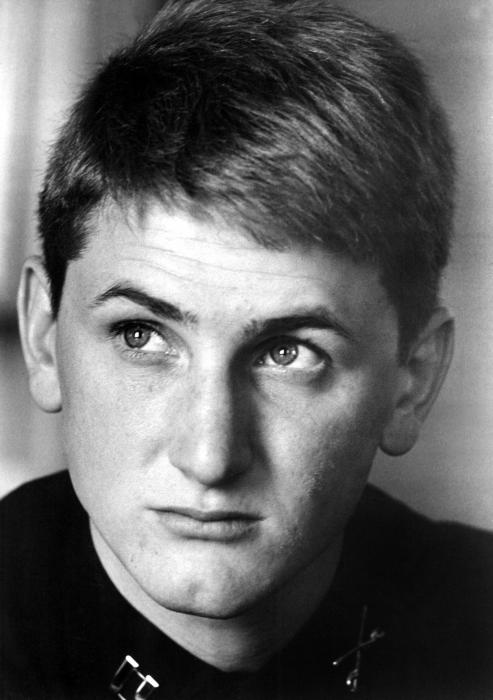
So, I have been on somewhat of a Sean Penn kick recently, specifically his early stuff. He must have been just the most astonishing young actor to watch back in the early-mid ‘80s. Here, I am going to rank the best performances of his award-winning and diverse career. Note: as incredible of an actor as Penn is, I still feel that his greatest contribution to cinema is his most recent directorial outing, Into the Wild.

For the record, here are the potential contending performances that I have not seen yet: At Close Range, Casualties of War, Colors, State of Grace, and This Must Be the Place


Others receiving votes: 21 Grams, The Game, Hurlyburly, She’s So Lovely

10. Fast Times at Ridgemont High (character: Jeff Spicoli; 1982)
Everyone has a favorite scene or line from this Penn performance. Personally, mine is the ridiculous surfer dream sequence. The film was basically Penn’s big coming-out party, playing a stoner for the ages. Perhaps the only stoner character that can rival the iconic nature of Jeff Spicoli is Wooderson from Dazed and Confused. What is so great about the Penn in this film is that he totally doesn’t belong in the film, but he is so hilarious that he demands screen time, and as a result, walks away with the movie.
9. The Thin Red Line (character: 1st Sgt. Edward Welsh; 1998)
In what is definitely one of the best casts of the ‘90s, Sean Penn rises to the top. Even though Elias Koteas has all the Oscar scenes and Nick Nolte has the fieriest character, it is Penn’s sincerity that is the lasting impact of one of the most amazing war films of our time. Seeing how brilliant he was in this Malick film, I can’t help but feel upset about how little screen time he ended up with in The Tree of Life. He is a perfect Malick performer.
8. The Assassination of Richard Nixon (character: Samuel J. Bicke; 2004)
The part of this performance that most resonated with me was how you could really begin to understand what was going on in Samuel’s head. It is so difficult to connect the audience to a character who is that unstable. Penn embraces the devastating nature of the character as well as any actor, and he turns this downbeat character study into some of his finest work.
7. Taps (character: Cadet Captain Alex Dwyer; 1981)
While Timothy Hutton and Tom Cruise got all the pub for this fairly average cadet drama, it is Penn’s supporting part who steals the movie. Perhaps more than any actor today, Penn can give an entire performance with his eyes. This is one of those tragic characters that you can feel the pain of his character just by looking at his face. The scene that results in the fistfight with Major Moreland is devastating to watch.  An astonishing debut performance by Penn.
6. The Falcon and the Snowman (character: Daulton Lee; 1985)
I would like to thank Richard Roeper for naming this one of the most underrated movies during his Breach review. If he hadn’t then I may never have found it. It is such a brilliantly-written movie, and the way that Timothy Hutton and Sean Penn play off each other is simply incredible. Usually, you can still see spots of Penn in his roles, but this is one of the cases where he gets completely lost in the character. It isn’t one of the toughest roles he has played, but it is certainly one of his most complete performances. See this movie if you haven’t.
5. Bad Boys (character: Mick O’Brien; 1983)
Sean Penn is absolutely on fire in this movie. He could have easily overplayed the role with all the figurative and literal punches that his character takes throughout the film, but he plays it subtle. He has such pain and anger in his face. It is one of his most affecting performances, and it is clearly the film that turned Penn into the finest young actor of his time.
4. Milk (character: Harvey Milk; 2008)
This could be the most passionate performance that Penn has ever delivered on screen. He lived as Harvey Milk. Seeing clips of the subject of the film, I realized that it is more than just an impression. It was an embodiment. The way Penn is able to wear the quirks of his character and still give the commanding performance that we expect from him is a marvel to watch. And the scenes between him and Josh Brolin are pure brilliance.
3. Mystic River (character: Jimmy Markum; 2003)
Despite the opinion of some (Zach), this performance stands as one of the best of the 2000s. It is so much more than the “Is that my daughter in there?!” scene. The devastating scene in the middle of the street with Kevin Bacon and the “I can’t even cry for her” scene just rip my heart out every time in a way that only Penn can. He gets inside his characters and just bleeds passion and authenticity. There is no escaping the impact that Penn has on this movie. It is a master class in acting.
2. Dead Man Walking (character: Matthew Poncelet; 1995)
This performance is maybe the most devastating of Penn’s career. What is so impressive about this (other than everything) is that so much of his performance is reactions. The way he reacts to hearing his appeal was denied. The way he reacts to hearing the film’s title. It is a performance of subtlety and sincerity. I cannot express how much Penn’s performance got to me particularly in the later scenes. It is certainly among the elite performances of not only his career, but of anyone’s career in the last 20 years (yet Nicolas Cage is still my win in 1995).
1. Carlito’s Way (character: David Kleinfeld; 1993)
If you didn’t know better, you wouldn’t even realize that Penn was in this movie. Never has he disappeared into a role the way he did into the coked-out lawyer in Brian De Palma’s superb crime drama. Whenever you can be on the receiving end of an Al Pacino bout of rage and still steal the scene, you know you are doing something special. But the beauty of this performance is that you don’t really know what it is that he is doing. He simply sheds every bit of Sean Penn and steps into David Kleinfeld. Oh, and you know you are iconic when you inspire a character in a video game like GTA: Vice City. Penn is so good that it is scary.


Thoughts? Comments? I know my #1 can’t be too popular of a choice. Anyone else stoked for The Gangster Squad?
Let me know.

Monday, May 7, 2012

The Best Film of 2011: A Separation


           How can I possibly convey the complexity and richness of A Separation without (A) making the story seem oversimplified, (B) reducing my praise of it to “What a great picture from Iran, the Iranians are so good at moving movies,” and (C) revealing so much of the plot that it fails to surprise the viewer?  I worry the most about that last point because regardless of what you may have heard about it, A Separation contains a multitude of unexpected elements and surprises.  There is no way that overexposure to the film’s plot completely takes away from the incredible experience of seeing it for the first time, but as with any great motion picture, going into it completely “dry” renders the best viewing.  So while this review contains minor spoilers, know that the richest experience of viewing this film would be one completely removed from prior knowledge of its unfolding of characters and events.
So let’s get some basic information about of the way without delving too deep.  Yes, A Separation is a movie about a modern family suffering through the day-to-day tumult of the parents’ impending divorce.  Yes, the story is set in present-day Iran, but not among backwards cave-dwelling zealots the media has conditioned us to expect.  Yes, one of the parents wants to leave Iran, but not necessarily because the country is an unsafe place to raise children (on the contrary, Iranian society looks remarkably “normal” and well-adjusted to modernity throughout the film, with the only real urban crisis coming in the form of bad traffic.)   Yes, the story involves elements of religion and Sharia law.  Yes, you could argue that the film is critical of how the spirit of the law can never really reflect the true attitudes and complexities of daily life. 
And yes, like Roger Ebert, I believe A Separation was the best film of 2011.  By far.  It is the best film of the last several years, too.  Like Crash and Changing Lanes, the film highlights how seemingly chance encounters result in everyday people ultimately revealing their deepest characteristics, fears, flaws, and morals.  As in Crash, we see a man caring for his elderly father who is fading to a sad, inevitable decline from consciousness; we see a service worker accused (falsely) of stealing from  her more wealthy employer; we see two men lose their tempers and stubbornly resort to outrageous extremes of violence and aggression to justify their prior actions.  We see children lose faith in their parents, and parents act childish in the name of protecting the wills of their families.  We eventually see a lack of divisions between class, gender, age, socio-economic status, and even religious observation.  We are left with the knowledge that we are all made up from the same, morally weak fiber susceptible to falling apart at the hands of the dangerous forces of pride, doubt, and deceit. 


The movie involves six main characters: Nader (Peyman Moadi) and Simin (Leila Hatami), a couple who have separated and are living at different residences; their 11-year-old daughter, Termeh (Sarina Farhadi, daughter of the director, Asghar Farhadi), who dotes on her father and resents her mother for wanting to leave; Nader’s elderly father (Ali-Asghar Shahbazi), who has to be monitored and cared for; Razieh (Sareh Bayat), a caretaker hired by Nader to care for his father; and Razieh’s husband, Hojjat (Shahab Hosseini), a man harassed by creditors.  You will not find six more richly-drawn, complex, interesting characters in any movie this year.  Never mind what their individual strengths and weaknesses are; they all display signs of loyalty, unselfishness, and humanity.  In the remarkable opening scene, at a divorce court mediation between Nader and Simin, Simin observes that Nader is a good husband and father, and Nader says he cannot abandon his father. 
But around a third of the way into the movie, an event occurs which involves all six of the characters.  The rest of this movie will revolve around the reconstruction of this event – what truly happened, which individuals were involved, and who should be blamed and compensated for the toll it takes.  Like a great magician (and somewhat like the best films of Michael Haneke), director Asghar Farhadi creates scenes which, on the surface, seem simple and ordinary, but require a delicate understanding to comprehend the events that follow.  And as the characters struggle to communicate and find the answers to these questions, their seemingly pure moralities all simultaneously crumble (with the exception of innocent Termeh, who, along with Hojjat and Razieh’s young daughter, remains mostly a sad observer of the action that unfolds; nonetheless, she emerges as the film’s most interesting and important character).  I identify three main lines of conflict throughout the film: Men and Women, Young and Old, and Law and Ethics.


Men and Women: Nader and Hojjat are proud, stubborn men who are unable to resolve conflict because of their staunch inability to compromise.  Even by the end of the film, when it is apparent that neither man will suffer significant penalties and losses due to their previous actions, they are still unable to reach a mutual agreement.  A simplistic observation would be that they display “typical” machismo characteristics of the Persian man.  But A Separation is deeper than that, and there are other instances that reveal both men to be quite progressive in their views of traditional masculine and feminine gender roles (Nader says nothing when he sees Razieh’s daughter remove her burqa, and Hojjat is not upset when he finds out that his wife has changed the clothes of Nader’s father).  But when Simin meets with Razieh on her own to negotiate a compromise between the two families, Nader is upset that his wife has gone to such lengths of reconciliation without telling him.  In this way, there really isn’t anything uniquely Iranian or Muslim about men and women act in this film.  They reflect universal truths – men are impatient, irrational, quick to act, and aggressive in their demeanor, and while women try to compromise in a more civilized manner, they are unable to mitigate the irascible manner of their husbands.  Interestingly, it is not the male characters who invoke Islamic law in justifying their actions, but the women, and specifically Razieh, who is a devout, pious Muslim woman.
Young and Old: The best scene of the film (and there are many to choose from) happens so quickly and so naturally that it may be easy to miss.  It involves a central exchange between Nader and Termeh (some major spoilers here). Nader reveals to his young daughter that he had possession of key knowledge that she, the audience, and the Iranian court did not previously believe him to have.  In other words, we learn that he has lied to the court about information that would otherwise cement his fate and the fate of his daughter to unhappiness – but all in the name of protecting his family, and maintaining his freedom for his daughter (in this way, law can never truly convey what is “right” and what is “wrong” in a society).  Soon, tragically and inevitably, Termeh is asked to stand before the judge and state whether her father’s testimony is correct or not.  Knowing that her father’s livelihood lies in the balance in the words that she chooses to say, her reaction is immediate, emerging from her gut and not her brain, and profoundly influential on her ethical development.  Once she says it, she can never go back (it’s a little like the climatic “glance” made by a child at the end of Louis Malle’s great Au Revoir les Enfants).  Just like everyday life, our moral character is not defined by lengthy speeches or tremendous acts of heroism, but simple “yes” and “no” reactions that contribute deeply to the people we are.  We run into these situations every day, and this scene is somehow profound in its sheer banality and ephemerality.  As the adults unravel in childish behavior, the children must assume adult responsibility and dignity.
            Law and Society: As noted earlier, the characters and situations are largely secular, but Sharia law does plays a crucial role in two specific episodes in the film, one toward the beginning and one at the end.  Both involve Razieh.  Is it entirely fair to characterize A Separation as critical of Islam and Iran?  In a way, yes; characters have to circumvent the inconveniences of the law in order to support themselves on a daily basis.  In the first scene of the film, Nader and Simin’s grounds for divorce are not considered significant enough for the Iranian court to approve.  But the film also illustrates that the law really doesn’t really persuade people from doing harmful things, and nor is it inclusive of what people “should” or “shouldn’t” do.  In the central event of the film, it is clear that one of the characters has acted in an immoral way, but what is unclear is whether it is illegal or not.  The spirit of Sharia law emphasizes that there is no difference between the practice of the law and the practice of good ethics, but A Separation illustrates that there is a clear disconnect between the two.  It isn’t just a matter of characters lying while invoking the name of Allah (although at one point a character does do this).  It is a really a question of if law serves any purpose providing citizens with a higher quality of life, which is severely held in doubt by the final two scenes of the film.


I haven’t even addressed the look and feel of A Separation, which is one largely made up of handheld cameras, overlapping, commonplace dialogue, and no musical score.  In other words, the film is very much modern neo-Realist, and resembles the moral quandaries in the best films of Ozu Yasujiro.  The performances are uniformly superb, but particularly Moadi (who is sometimes terrifying in his character’s gradual transformation) and Sarina Farhadi, as endearing as she is quietly complex.  It may also be the first film I can remember which audiences will actively not want to leave through its closing credits.  The final image of the movie is haunting, symbolic, complex, and unforgettable.
When I described A Separation to Todd, I said that it was a little like a mix of Kramer vs. Kramer and In the Bedroom (my two favorite films).  Like Kramer, it begins with an unhappy marriage and an impending divorce, with a man and a woman saddled with the knowledge that the hopes and dreams once invested in their happy union have been replaced by bitter arguments and resentment.  Like In the Bedroom, we see characters unravel in the aftermath of an unspeakable tragedy, and ultimately, we learn to have little faith in human nature.  People are weak, callous, manipulative, and indulgent.  A Separation is not the first movie to say this, and these certainly are not uniquely Iranian problems.  But it is one of the few movies which conveys this in a story which is compulsively interesting and complex while at the same time reaffirming the power and joy of watching a great motion picture unfold. It reminds us why we go to movies in the first place.

4 out of 4 stars.