Films seen: 85
Thumbs up percentage: 54.12%
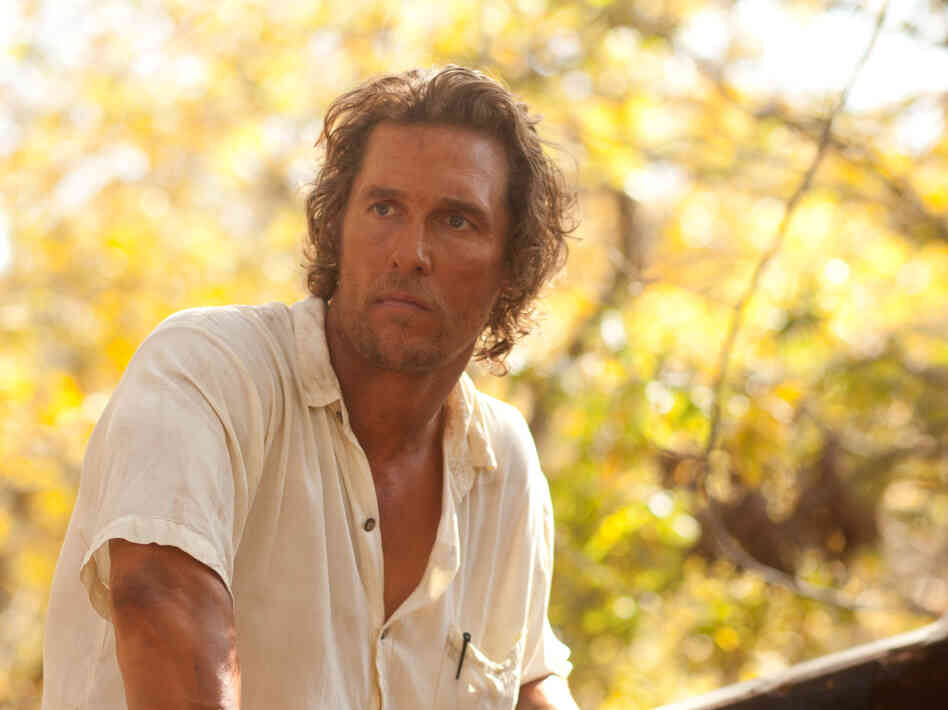 Actor of the year: Matthew
McConaughey, 2nd consecutive year (Dallas Buyer’s Club, Mud,
The Wolf of Wall Street)
Actor of the year: Matthew
McConaughey, 2nd consecutive year (Dallas Buyer’s Club, Mud,
The Wolf of Wall Street)
Actress of the year: Rooney
Mara (Ain’t Them Bodies Saints, Her, Side
Effects)
Best Actor: Michael Jordan –
Fruitvale Station, Leonardo DiCaprio
– The Wolf of Wall Street, Joaquin
Phoenix – Her, Ethan Hawke – Before Midnight, Robert Redford – All Is Lost
Best Actress: Elle Fanning –
Ginger & Rosa, Julie Delpy – Before Midnight, Brie Larson – Short Term 12, Sandra Bullock – Gravity,
Greta Gerwig – Frances Ha
Best Supporting Actor: Casey
Affleck – Out of the Furnace, James
Franco – Spring Breakers, Jonah Hill
– The Wolf of Wall Street, Michael
Cera – Magic Magic, Michael
Fassbender – 12 Years a Slave
Best Supporting Actress: Annika
Wedderkopp – The Hunt, Scarlett
Johansson – Her, Rachel Boston – It’s a Disaster, Kristin Scott Thomas – Only God Forgives, Mary Elizabeth
Winstead – The Spectacular Now
Best Original Screenplay: Her, Nebraska,
The Place Beyond the Pines, Inside Llewyn Davis, Drinking Buddies
Best Adapted Screenplay: Before Midnight, The Wolf of Wall Street, The
Spectacular Now, Short Term 12, 12 Years a Slave
Most underrated film: The Place Beyond the Pines
Most underrated film: The Place Beyond the Pines
Most overrated film: Saving Mr. Banks
Biggest surprise: Side Effects
Biggest disappointment: Out of the Furnace
Best ensemble casts: Her, Drinking Buddies, The Wolf of
Wall Street, The Place Beyond the
Pines, Prisoners
Bottom five of the year (from bad
to worst): 42, Quartet, Now You See Me, Man of Steel,
A Good Day to Die Hard
Most anticipated unseen films: Blue Is the Warmest Color, Dallas Buyers Club, The Great Beauty, In a World…, Philomena, Snowpiercer, The Wind Rises
Others receiving votes: The Act of Killing, Ain’t Them Bodies Saints, All Is Lost, The Hunt, It’s a Disaster
10. Short Term 12 (directed by Destin Cretton)

One of the great under-the-radar movies of the year was Destin Cretton’s
expansion of his terrific short film. Short
Term 12 follows Grace (breakout star Brie Larson), a worker at a foster
care facility that watches and guides troubled underprivileged kids. There is a
deep heartache and pain in the story, especially as more of Grace’s past gets
revealed and shows why she is such a committed and caring worker. It features
some of the truly elite scenes of the year, chief among them the “So You Know
What It’s Like” original song by young actor Keith Stanfield, which clearly was
the best song of 2013. Short Term 12
is not a movie that will sit well with a lot of audiences since it is so understated
and sad, but there is a sense of warmth that we feel following the movie that
makes it very rewarding, and in a way, beautiful.
9. The Spectacular Now (directed by James Ponsoldt)

This is a very personal inclusion on this list. I love movies that ooze
nostalgia, and this is the best one its kind in several years. James Ponsoldt,
who also directed last year’s indie gem Smashed,
has become a go-to director for independent comedy-dramas. All of his movies
thus far have been in some way about alcoholics, but none of them have been as
perceptive and meaningful as this one. It is about Sutter (the excellent Miles
Teller) and Aimee (Shailene Woodley). They form the most endearing movie couple
of the year. Ponsoldt has a knack for creating characters with flaws that we
cannot help but care for. Sutter is the hard-partying high schooler, and Aimee
is the outcast. They begin an unlikely friendship and form a bond that no one
expected, least of all the two of them. In the end of this little movie, we
feel undeniably bittersweet, satisfied, and melancholic. It puts sentimentality
away and leaves the audience to view this rich and realistic story in all its
nostalgia and ordinary beauty. Ponsoldt could be the next Alexander Payne.
8. Inside Llewyn Davis (directed by Joel Coen, Ethan Coen)

This is the best American music film since 2007’s indie masterwork Once. The Coen brothers have outdone
themselves with this brilliantly detailed and darkly hilarious little film. At
no point does the movie try to be popular. It features some of the most
unlikable characters the Coens have created, yet, we care all too much. Llewyn
Davis (Oscar Isaac) is a struggling folk singer in the 1961 New York, and he
lives for his music. He lives his life in the way described in his lyrics.
There is no glamour in this story, no happy ending. It is all realism. We drop
in on Llewyn’s life and watch him navigate the folk scene for a period of time,
and we could not be more grateful after the movie is over. It is a remarkable
movie and one that only gets better as time goes by. You will be humming the
extraordinary soundtrack for the foreseeable future. I was aching to see it
again in the days following.
7. Gravity (directed by Alfonso Cuaron)

There was no greater movie miracle in 2013 than Gravity. There were basically just two cast members, and one of
them is gone for the majority of the film. We are essentially watching Ryan
Stone (Sandra Bullock) floating through space and trying to find any way to
survive without any real working communication. It sounds like a short film’s
premise, but it is edited in a way that creates the most intense movie-going
experience of the year. It is also the best use of 3D maybe ever (if not, then
#2 behind Avatar). The creativity and
imagination that this movie took, as well as the attention to detail makes a
movie that would otherwise seem ridiculous feel absolutely involving and
realistic. It is one of the truly magical films of 2013.
6. 12 Years a Slave (directed by Steve McQueen)

This is perhaps the only instant classic 2013 film. While watching the
long, inspiring struggle of the human spirit in Solomon Northup (Chiwetel
Ejiofor), a free man who was drugged and enslaved for 12 years, the audience
just feels like they are watching an already polished film classic. Each and
every scene is vital to the tone of the story. It is difficult to watch, to be
sure. However, there is no more rewarding experience that one can have from a
2013 film. 12 Years a Slave is an
important piece of cinema and one that will undoubtedly be looked back on as a
crowning achievement of this era.
5. The Place Beyond the Pines (directed by Derek Cianfrance)

This was the biggest surprise masterpiece of 2013. The movie is
separated into three segments, and there is a passing of the torch between
them. The segments are of course intertwined, but unlike several other movies
with this layout, the bridges are not predictable. Each segment sports an
astonishing leading performance (Ryan Gosling, Bradley Cooper, Dane DeHaan) and
by a seemingly different genre (crime drama via Drive, cop drama via Copland,
indie drama via In the Bedroom). The
further along the story rolls, the more we get into it and become aware of the
fate of the characters. When the end credits start, we realize that 140 minutes
have gone by and we still want more.
4. Nebraska (directed by Alexander Payne)

I have a fondness for Payne movies that cannot be overstated. His movies
are so realistic and different. I felt like after Sideways that I would never be able to truly be blown away by one
of his films, but I was wrong. This movie is one of the purest and painfully
funny movies I have seen in years. Payne did not write this movie, but it is
one of his movies at its core. It is his finest directed job as well. The
black-and-white format takes away all outside factors and just lets the
characters be. We are essentially just following Woody Grant (Bruce Dern) and
his son David (Will Forte) on an ill-conceived cross-country trek. Road trip movies
are common; this one is not. It is written as a sad, depressing drama, yet its
flawlessness in developing relatable quirks in the characters is what causes
the laughs and makes the movie tick. It may not have the ambition of other
films on this list, but it is just about perfect.
3. The Wolf of Wall Street (directed by Martin Scorsese)

Zach and I clearly disagree on this one, but this movie really is a
daring and hilarious piece of work. The story is about Jordan Belfort (Leonardo
DiCaprio), the scamming leader of Stratton Oakmont, a firm who sells worthless
stocks to unwitting consumers, scheming out millions every week. On paper, yes
this movie is unappealing. Who wants a true story comedy (or sorts) about
criminals who never really get caught or get what is coming to them? Well, that
is exactly what Scorsese thought. He focuses in on Belfort, and lets him tell
the story. It is frustrating, and it is only hilarious because we want it to.
It doesn’t play for laughs, but the characters and situations are so outrageous
that we can’t help but laugh at their expense. It is loaded with drugs, women,
and greed. In format and subject, it is nearly identical to Goodfellas. Under normal circumstances,
that would bother me. This is not a normal case. It is the most thrilling and
unrelenting 3 hour movie I have ever seen.
2. Her (directed by Spike Jonze)

Spike Jonze has made himself an A-list director in just four films. He
has a style and subtlety that no one else has. This movie has less Being John Malkovich and Adaptation in its visuals, but there is
every bit as much quirkiness and sadness in their stories. Like his most recent
masterwork Where the Wild Things Are,
this is a passion piece. From the opening shots of the film, we are completely
glued to a movie about a man (Joaquin Phoenix) falling in love with his
computer operating system (Scarlett Johansson). It sounds strange until you
actually see it happen. It could be the next The Truman Show in terms of creating an atmosphere and visionary
look at where we are heading as a society. In its comedy, it is equal parts The 40 Year Old Virgin, Punch-Drunk Love, and Eternal Sunshine. There is also a fair
amount of Lost in Translation in how
the characters and story are treated. It is nothing like any of those, however.
It is a complete original, and it just feels like a landmark piece of cinema.
1. Before Midnight (directed by Richard Linklater)

Unless something drastic happens in the next couple months of 2013 video
releases, then this will remain my #1 of the year. Like the previous two
installments in this series (1995’s Before
Sunrise, 2004’s Before Sunset),
this film is strictly dialogue. Even more so than its predecessors, Midnight could not exist without the
previous ones. Every word of it is drawing from the bank of passion and
commitment that we feel for Jesse (Ethan Hawke) and Celine (Julie Delpy), the
two disarming main characters of this decades-long romantic saga. This film is
not as much about broken hearts and charming romances; this one is relaxed. At
least it feels that way right up until our two protagonists are alone. The
entire third act is in a hotel room, and it contains the most brilliant,
devastating, heated conversation I have ever seen in a movie in recent memory.
It has all the makings of a title bout without a single punch thrown. The
audience is left on edge and inevitably begging for more after it is over.
Please, Mr. Hawke, Mr. Linklater, and Ms. Delpy…give us more in 2022. I am
already making arrangements for seeing it on opening night.
Thoughts? Your top 10? Anyone else adore Jesse and Celine like I do?
Comment below…


